Is Yogurt Safe for Cats? What Every Cat Owner Should Know
The Direct Answer: Is Yogurt Safe for Cats?
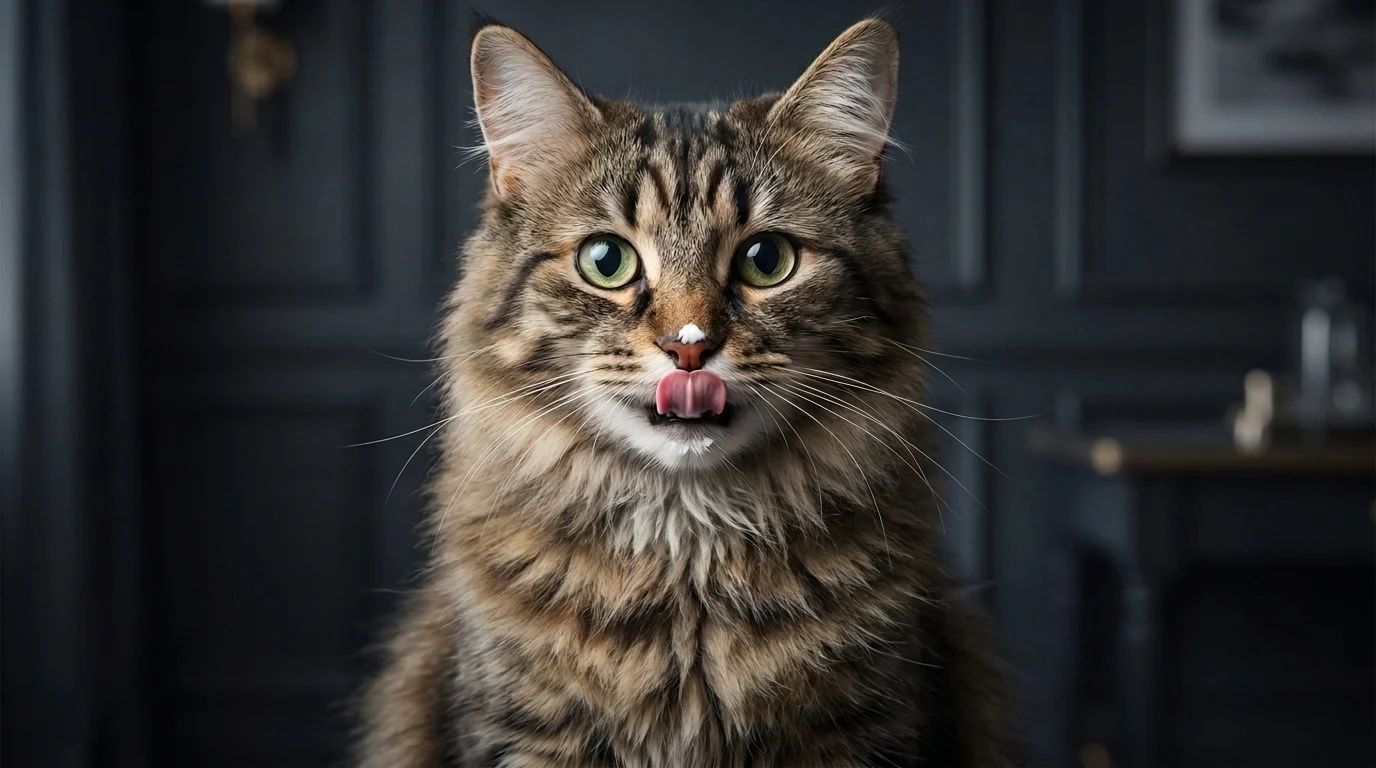
Plain, unsweetened yogurt is generally safe for cats in very small amounts—about one teaspoon maximum. Greek yogurt is the safest choice due to lower lactose content. However, most adult cats are lactose intolerant, so digestive upset is common. Never give flavored, sweetened, or sugar-free yogurt, as these contain harmful additives and potentially fatal ingredients like xylitol.
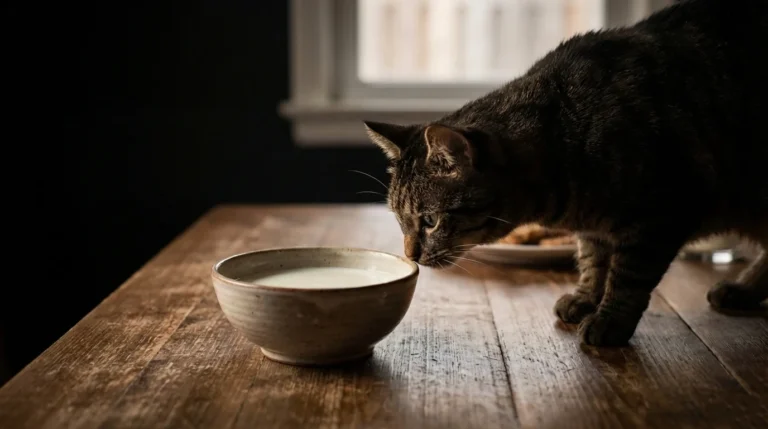
Last Tuesday, I caught my cat Miso with her entire face buried in my yogurt container. The guilty look she gave me was priceless, but my immediate thought was pure panic: is she going to be okay?
If you’re reading this, you’re probably in the same boat. Maybe your cat just licked your spoon, or you’re wondering if yogurt could be a healthy treat. The answer isn’t as straightforward as you’d hope.
Most advice online either says “absolutely not” or “sure, it’s fine”—which doesn’t help when you’re standing in your kitchen trying to decide if you need to call the vet. Let me give you the real story on yogurt and cats, based on what I learned after Miso’s yogurt incident and conversations with my veterinarian.
Table of Contents
The Yogurt Safety Breakdown: What’s Safe and What’s Not
Quick Comparison Table
| Yogurt Type | Safety Level | Key Concerns |
|---|---|---|
| Plain Greek Yogurt | ✅ Generally Safe | Lower lactose; limit to 1 tsp |
| Plain Regular Yogurt | ⚠️ Use Caution | Higher lactose; digestive upset likely |
| Flavored Yogurt (any kind) | ❌ Avoid | High sugar, artificial ingredients |
| Sugar-Free Yogurt | ❌❌ TOXIC | May contain xylitol—fatal to cats |
| Vanilla Yogurt | ❌ Avoid | Added sugar and artificial flavoring |
| Fruit-Flavored Yogurt | ❌ Avoid | Sugar, syrups, preservatives |
| Plant-Based Yogurt | ❌ Avoid | High fat, not suitable for cats |
Understanding Feline Lactose Intolerance
Why Most Cats Can’t Handle Dairy
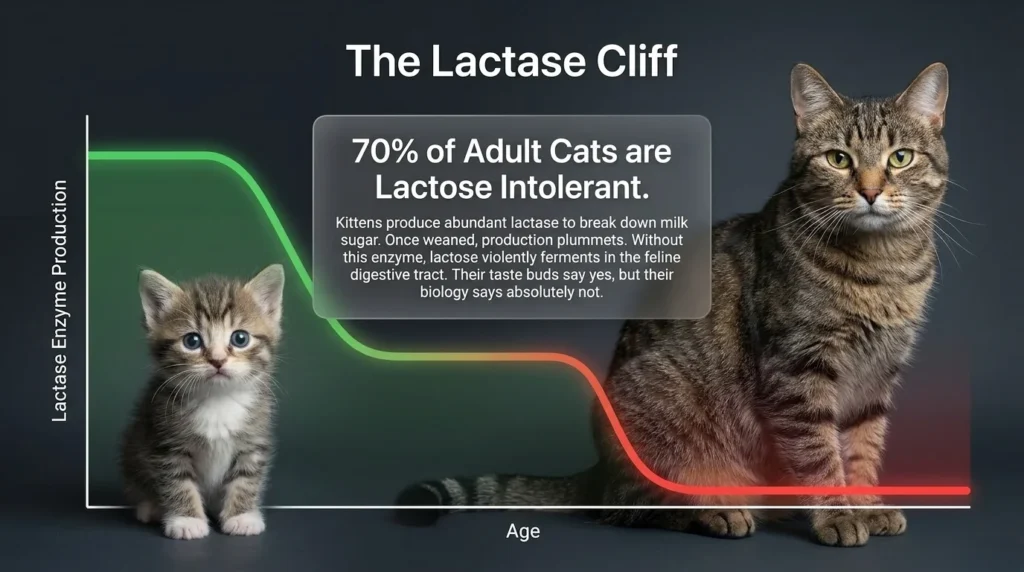
Here’s something that surprises people: around 70% of adult cats are lactose intolerant.
When kittens are nursing, they produce plenty of lactase—the enzyme that breaks down lactose (milk sugar). But once they’re weaned, most cats stop producing significant amounts of this enzyme. Without lactase, the lactose just ferments in their digestive tract, causing all sorts of unpleasant symptoms.
That’s why your cat might desperately want your yogurt but end up with diarrhea hours later. Their taste buds say yes, but their digestive system says absolutely not.
Symptoms That Your Cat Can’t Tolerate Yogurt
If your cat has eaten yogurt and their body isn’t handling it well, watch for these signs within 8-12 hours:
- Diarrhea or very soft stools
- Vomiting
- Stomach gurgling or obvious discomfort
- Gas and bloating
- Decreased appetite
- Hiding or lethargy
Most of these symptoms clear up on their own within 24 hours. Keep fresh water available and stick to their regular food. But if symptoms are severe or last beyond a day, that’s vet territory.
Why Yogurt Is Different from Milk
Even though most cats struggle with dairy, yogurt has one advantage: fermentation.
The process that turns milk into yogurt breaks down a significant portion of the lactose. The live cultures (probiotics) also aid digestion. That’s why some lactose-intolerant cats can handle a tiny taste of plain yogurt when they can’t tolerate milk at all.
But—and this is important—”can handle” doesn’t mean “should have regularly.” Yogurt is still dairy, and it’s still not part of a cat’s natural diet.
Greek Yogurt vs. Regular Yogurt: Which Is Safer?

Greek yogurt wins this round, and here’s why.
The straining process that makes Greek yogurt thick removes much of the whey—and with it, a lot of the lactose. Less lactose means easier digestion for cats who’ve lost their lactase enzymes.
When I asked my vet about the yogurt incident with Miso, she specifically said if I’m going to share any dairy, make it plain Greek yogurt. The protein-to-lactose ratio is better, and the thicker consistency means cats tend to eat less of it.
Regular plain yogurt isn’t toxic, but it has more lactose and a thinner consistency that cats can lap up quickly. That increases the chances of digestive problems.
The Hidden Dangers in Flavored and Sugar-Free Yogurt
Why Flavored Yogurt Is a Bad Choice
Strawberry yogurt seems innocent. It’s just yogurt with fruit, right?
Wrong. Flavored yogurts are loaded with added sugars, high-fructose corn syrup, artificial colors, and preservatives. Some contain as much sugar as candy. Cats don’t need any of these ingredients, and their digestive systems aren’t built to process them.
The fruit itself usually isn’t the problem—it’s everything else that comes with it.
The Xylitol Danger: Why Sugar-Free Yogurt Can Be Fatal
This is where things get deadly serious.
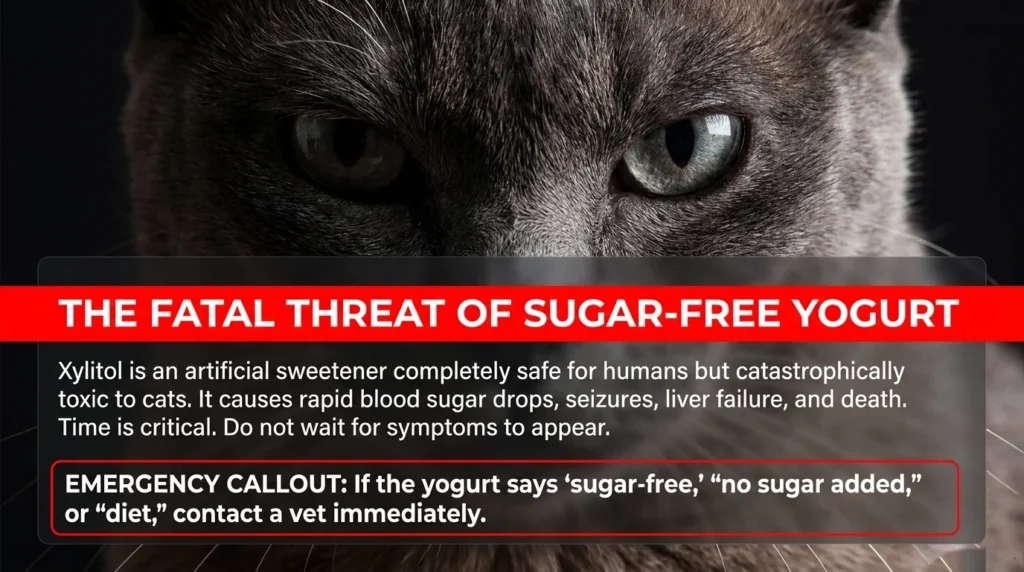
Many sugar-free and “diet” yogurts contain xylitol, an artificial sweetener that’s completely safe for humans but catastrophically toxic to cats (and dogs). Even a small amount can cause rapid blood sugar drops, seizures, liver failure, and death.
The terrifying part? Xylitol isn’t always obviously labeled. It might be listed as “birch sugar” or hidden in a long ingredient list. Some brands use it in regular flavored yogurts too, not just sugar-free varieties.
If your cat ate any yogurt labeled “sugar-free,” “no sugar added,” or “diet,” call your vet immediately. Don’t wait for symptoms. Time matters with xylitol poisoning.
How Much Yogurt Is Safe?
The One-Teaspoon Rule
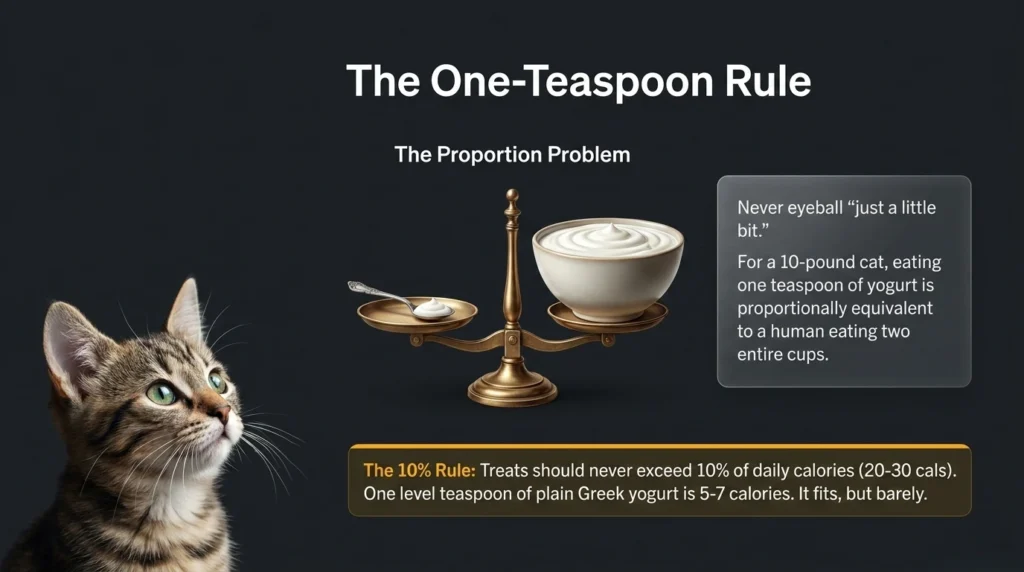
If you’re going to share yogurt with your cat, here’s your guideline: one teaspoon maximum, and only occasionally.
I know that sounds ridiculously small. But for a 10-pound cat, that teaspoon is proportionally similar to a human eating two cups of yogurt. It’s a significant amount relative to their body size.
After Miso’s yogurt adventure, I bought actual measuring spoons for her treats. No more eyeballing “just a little bit.” One level teaspoon of plain Greek yogurt, and that’s her limit.
Frequency Matters
Even if your cat tolerates yogurt well, it shouldn’t become a daily thing.
The 10% rule applies here: no more than 10% of your cat’s daily calories should come from treats or extras. For most cats, that’s about 20-30 calories per day. One teaspoon of plain Greek yogurt has roughly 5-7 calories, so while it technically fits, you’re better off saving it for special occasions.
Think of yogurt as a once-in-a-while thing, not a regular addition to their diet.
When Yogurt Can Actually Be Useful
The Medication Trick
Here’s where yogurt earns its keep in my house: hiding pills.
Miso is impossible to medicate. I’ve tried pill pockets, crushing tablets, hiding pills in her wet food—nothing worked until my vet suggested a tiny dab of plain Greek yogurt.
The yogurt coating makes pills slippery enough to swallow without chewing. Miso licks it down without realizing there’s medication inside. I use the absolute minimum amount—just enough to coat the pill—and it’s been a game-changer for giving her antibiotics and supplements.
If you use this trick, make absolutely certain you’re using plain, unsweetened Greek yogurt with no additives.
What to Do If Your Cat Ate the Wrong Type of Yogurt
Check the Label Immediately
Don’t panic yet—but do dig that yogurt container out of the trash and read every ingredient.
Look specifically for:
- Xylitol (or birch sugar, sugar alcohols)
- Artificial sweeteners (aspartame, sucralose)
- High sugar content
- Chocolate (rare but check)
- Fruit syrups and flavorings
If you see xylitol or any artificial sweetener, call your vet right away. This is not a “wait and see” situation.
Monitor at Home or Call the Vet?
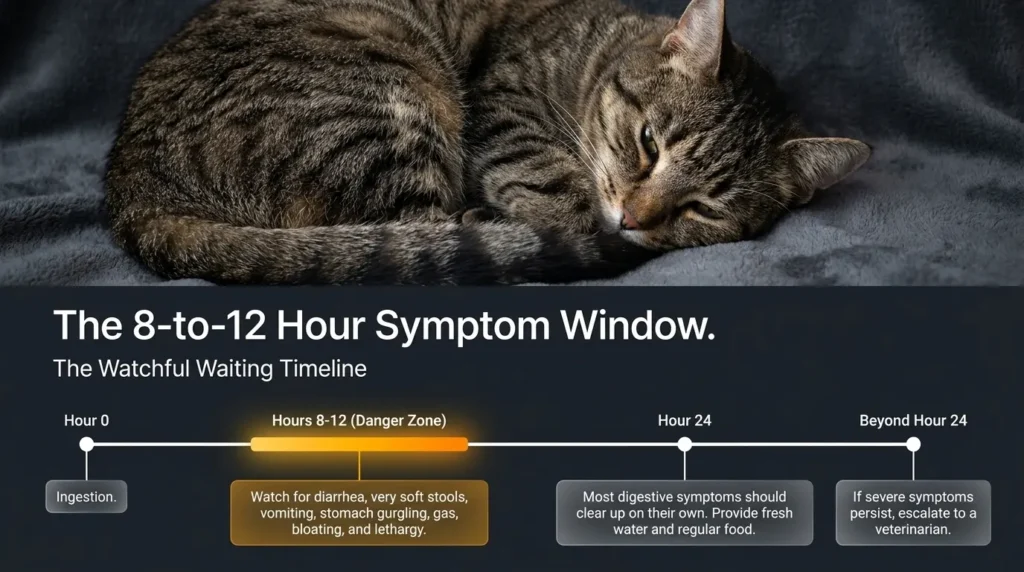
If your cat ate plain yogurt or sugary flavored yogurt (no artificial sweeteners), you can usually monitor at home. Watch for digestive symptoms over the next 12-24 hours, keep water available, and stick to regular food.
Call your vet immediately if:
- The yogurt contained xylitol or artificial sweeteners
- Your cat consumed a large amount (several tablespoons or more)
- Symptoms are severe (repeated vomiting, bloody stool, extreme lethargy)
- Your cat has existing health conditions like diabetes or kidney disease
Better Alternatives to Yogurt
Cat-Specific Probiotics
If you were considering yogurt for its probiotic benefits, save yourself the trouble and get cat-formulated probiotics instead.
Products like Purina FortiFlora contain the right bacterial strains for feline digestive systems, with no lactose, sugar, or unnecessary calories. I started using FortiFlora when Miso had stress-related digestive issues, and it made a visible difference within three days.
Plain Meat-Based Treats
Cats are obligate carnivores, which means their bodies are designed to thrive on meat, not dairy. Small pieces of cooked chicken, freeze-dried meat treats, or a spoonful of plain canned pumpkin (for digestive support) are all better options than yogurt.
These give your cat something special without the digestive risks that come with dairy.
Frequently Asked Questions
Key Takeaways
Here’s what you need to remember about yogurt and cats:
- Plain Greek yogurt is safest due to lower lactose content from the straining process
- Most adult cats are lactose intolerant and will experience digestive upset from dairy
- Never give sugar-free yogurt—xylitol is extremely toxic and can be fatal to cats
- Limit portions to one teaspoon maximum and only offer occasionally, not daily
- Flavored yogurts are off-limits due to high sugar, artificial ingredients, and preservatives
- Watch for symptoms like diarrhea, vomiting, or lethargy within 8-12 hours after consumption
Want more guidance on safe foods for your cat? Check out our guides on Can Cats Eat Cheese?, What Fruits Are Safe for Cats?, and Is Yogurt Bad for Cats?, and Can Cats Eat Yogurt?