
Is Yogurt Bad for Cats? The Truth About Dairy and Feline Health
The Direct Answer: Is Yogurt Bad for Cats?
Yogurt isn’t inherently toxic, but it’s not ideal for cats either. Most adult cats are lactose intolerant, making yogurt difficult to digest and likely to cause diarrhea or stomach upset. Additionally, many yogurts contain harmful ingredients—flavored varieties have excessive sugar, and sugar-free options often contain xylitol, which is fatally toxic to cats. Plain Greek yogurt in tiny amounts is least problematic.
I’ll never forget the morning I found my cat Miso sitting on the counter, her whiskers covered in strawberry yogurt residue. My first thought wasn’t “how cute”—it was immediate worry about what that yogurt might do to her digestive system.
The question “is yogurt bad for cats?” isn’t quite as simple as yes or no. The real answer depends on the type of yogurt, the amount consumed, and your individual cat’s digestive tolerance.
Most articles will tell you yogurt is either perfectly fine or absolutely forbidden. Neither extreme is accurate. The truth is more nuanced, and understanding why yogurt can be problematic for cats will help you make informed decisions about what your cat eats—whether by accident or intention.
Let me walk you through what actually happens when cats eat yogurt and why it’s generally not a good idea.
Table of Contents
Why Yogurt Is Problematic for Most Cats
The Lactose Intolerance Problem
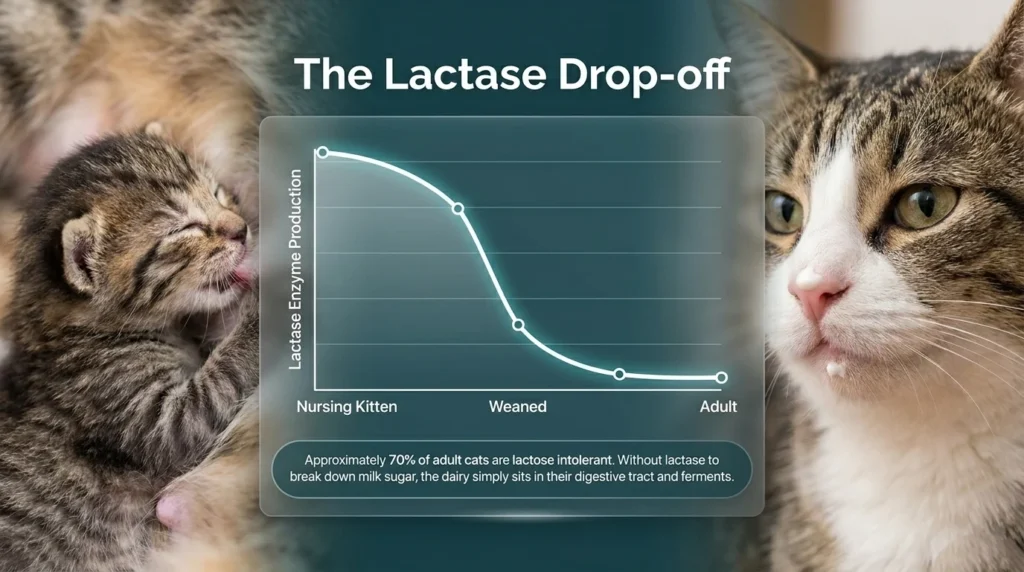
Here’s the biological reality: approximately 70% of adult cats are lactose intolerant.
When cats are kittens nursing from their mothers, they produce plenty of lactase—the enzyme needed to break down lactose (milk sugar). But once they’re weaned, lactase production drops dramatically. By the time they’re adults, most cats can’t properly digest dairy products.
Without enough lactase, the lactose in yogurt sits in their digestive tract and ferments. This leads to gas, bloating, cramping, and diarrhea. Your cat might love the taste of yogurt, but their digestive system definitely doesn’t love processing it.
What Happens When Lactose-Intolerant Cats Eat Yogurt
The symptoms typically appear within 8-12 hours after eating dairy:
- Diarrhea (sometimes quite watery)
- Soft, loose stools
- Vomiting
- Stomach gurgling and obvious discomfort
- Gas and bloating
- Loss of appetite
- Hiding or lethargy
Most cats recover on their own within 24 hours, but those hours can be pretty miserable for both of you. And if your cat has underlying digestive issues, dairy can make everything worse.
The Empty Calorie Problem
Even if your cat happens to be one of the rare adults who can digest lactose, yogurt still isn’t providing anything they actually need.
Cats are obligate carnivores. Their bodies are designed to get nutrition from meat, not dairy. Yogurt offers calories without essential nutrients cats require—it’s basically junk food for felines. Those calories add up quickly in a cat’s small body, potentially leading to weight gain without nutritional benefit.
The Dangerous Types of Yogurt
Quick Reference: Yogurt Safety Levels
| Yogurt Type | Risk Level | Primary Concerns |
|---|---|---|
| Plain Greek Yogurt | 🟡 Low-Moderate | Lactose intolerance, empty calories |
| Plain Regular Yogurt | 🟠 Moderate | Higher lactose, digestive upset |
| Vanilla Yogurt | 🔴 High | Added sugar, artificial flavoring |
| Fruit-Flavored Yogurt | 🔴 High | High sugar, preservatives, syrups |
| Sugar-Free Yogurt | ⚫ Extremely High | Often contains fatal xylitol |
| Low-Fat/Diet Yogurt | 🔴 High | May contain xylitol, artificial ingredients |
| Plant-Based Yogurt | 🟠 Moderate | High fat, oils, not nutritionally appropriate |
Why Flavored Yogurt Is Particularly Bad
Strawberry, blueberry, vanilla—these seem harmless, right? They’re not.
Flavored yogurts contain concentrated sugars, high-fructose corn syrup, fruit syrups, artificial colors, and chemical preservatives. A single serving can have as much sugar as a candy bar. Cats don’t process sugar the way humans do, and excessive sugar contributes to obesity, diabetes, and dental problems.
When Miso got into that strawberry yogurt, I checked the label afterward. The second ingredient was sugar. The fifth was “natural flavor,” which is industry code for a blend of chemicals. Nothing about it was natural or necessary for a cat.
The Xylitol Danger: When Yogurt Becomes Deadly
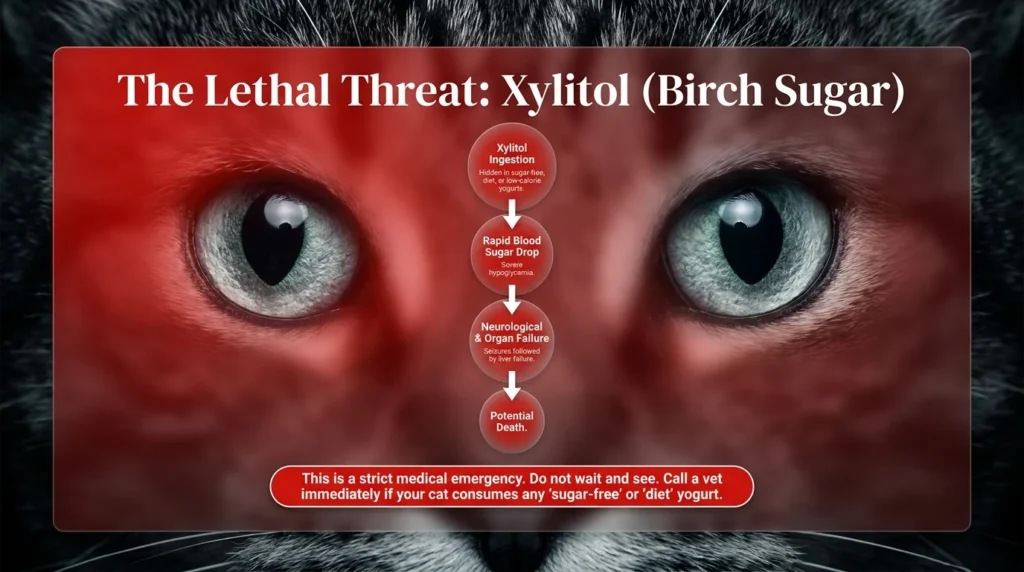
This is where “bad for cats” crosses into “potentially fatal for cats.”
Many sugar-free, low-calorie, and diet yogurts contain xylitol—an artificial sweetener that’s completely safe for humans but catastrophically toxic to cats and dogs. Even small amounts can cause:
- Rapid blood sugar drops (hypoglycemia)
- Seizures
- Liver failure
- Death
The terrifying part is that xylitol isn’t always obviously labeled. It might be listed as “birch sugar” or hidden among other ingredients. Some brands now add it to regular flavored yogurts too, not just sugar-free varieties.
If your cat ate any yogurt labeled “sugar-free,” “no sugar added,” “diet,” or “low-calorie,” call your vet immediately. This is a medical emergency, not a wait-and-see situation.
When Plain Yogurt Still Causes Problems
Individual Digestive Sensitivity
Even plain, unsweetened Greek yogurt—the “safest” option—can cause problems for cats with sensitive stomachs.
I learned this with my previous cat, Oliver. He could handle tiny amounts of plain Greek yogurt without immediate diarrhea, but he’d vomit several hours later. His stomach just couldn’t process dairy, period. Every cat is different, and there’s no way to predict tolerance without trial and error—which isn’t worth the risk.
Existing Health Conditions
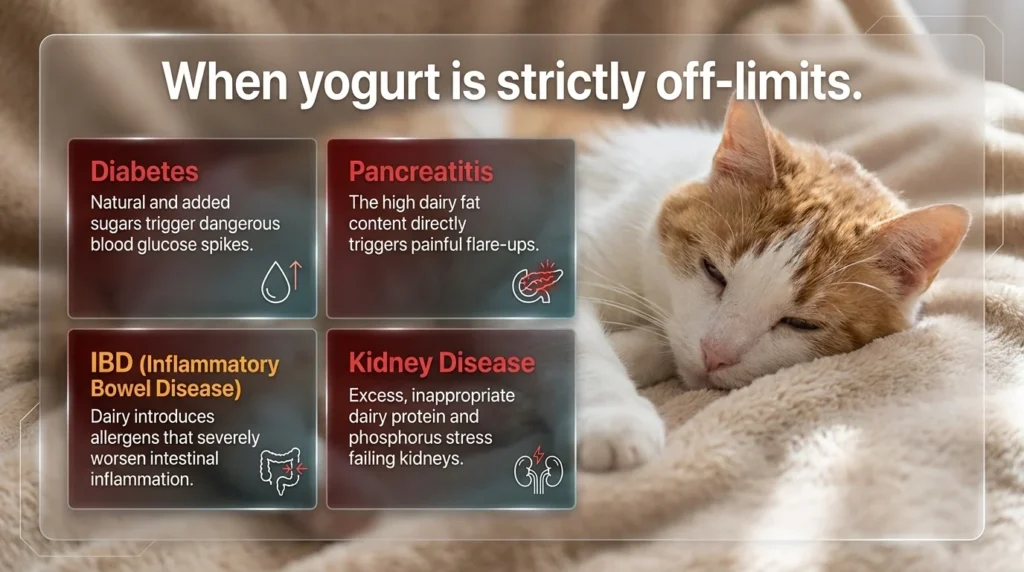
Yogurt becomes even more problematic for cats with certain health conditions:
- Diabetes: The natural sugars in yogurt can affect blood glucose levels
- Pancreatitis: The fat content can trigger flare-ups
- Inflammatory bowel disease (IBD): Dairy often worsens inflammation
- Kidney disease: Extra protein and phosphorus aren’t helpful
- Food allergies: Dairy is a common allergen
If your cat has any diagnosed health condition, yogurt should be completely off the table unless your vet specifically recommends it for medication administration.
The Medication Mistake
Some cat owners use yogurt to hide pills, which seems clever until it backfires.
While a tiny dab of plain Greek yogurt can help mask medication, it only works if your cat doesn’t have digestive sensitivity. If the yogurt causes vomiting, your cat just lost their dose of medication—and you have no idea how much they absorbed before throwing up.
There are safer alternatives for pill administration: pill pockets designed for cats, empty gel capsules, or compounded medications in flavors cats actually like.
Why Cats Crave Yogurt Even Though It’s Bad for Them
The Fat and Protein Appeal
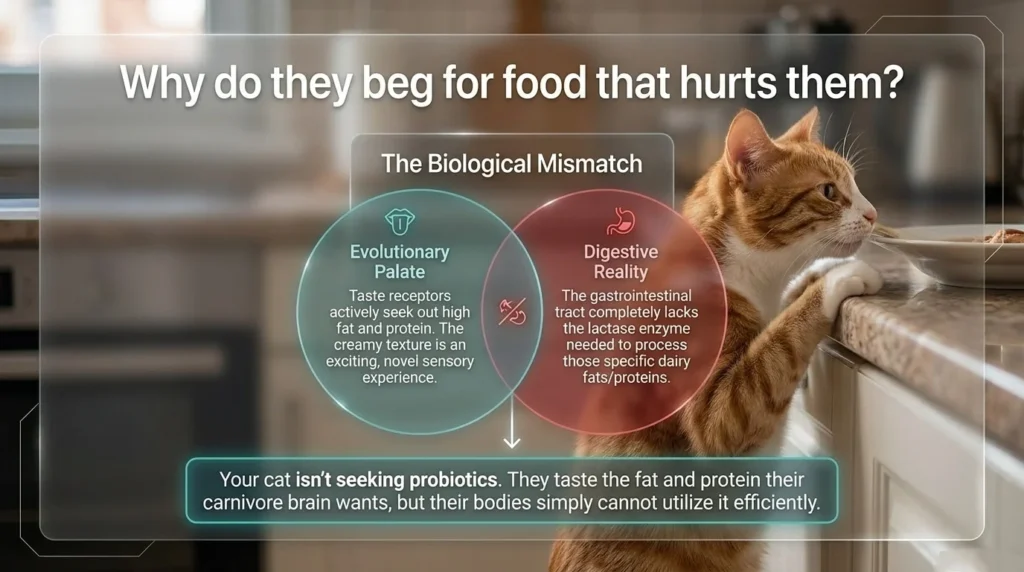
Cats are attracted to the fat and protein content in yogurt. Their taste receptors respond to these nutrients because they’re evolutionarily programmed to seek them out in meat.
The problem is that dairy fat and protein aren’t the same as meat-based nutrients. Cats can taste that yogurt has what they’re looking for, but their bodies can’t use it efficiently.
Miso begs for yogurt the same way she begs for chicken—but only one of those foods is actually good for her.
The Texture Factor
Some cats love the creamy texture of yogurt. It’s different from their regular food, which makes it exciting and novel.
This is purely about sensory experience, not nutritional need. Your cat isn’t thinking, “I need probiotics for gut health.” They’re thinking, “This texture is interesting and it tastes like fat.”
Better Alternatives to Yogurt
Cat-Specific Probiotic Supplements
If you were considering yogurt for its probiotic benefits, skip the dairy and get actual feline probiotics.
Products like Purina FortiFlora are formulated specifically for cat digestive systems. They contain the right bacterial strains in appropriate amounts, with no lactose, sugar, or unnecessary calories. I keep FortiFlora on hand for when Miso has digestive upset from stress or dietary changes, and it works far better than yogurt ever could.
Meat-Based Treats and Toppers
Remember: cats are obligate carnivores. Their treats should reflect their biology.
Better alternatives include:
- Small pieces of cooked chicken or turkey
- Freeze-dried meat treats
- Low-sodium bone broth made for cats
- Freeze-dried raw meat toppers
- Plain canned pumpkin (for digestive support)
These provide excitement and variety without the digestive risks of dairy.
Safer Ways to Hide Medication
If you’re using yogurt to disguise pills, try these alternatives instead:
- Pill pockets designed for cats (chicken or salmon flavored)
- Empty gel capsules (put the pill inside, easier to swallow)
- Greenies Pill Pockets (specifically engineered for medication)
- Compounded medications in tuna or chicken flavoring
- Transdermal gels applied to the ear (for certain medications)
What to Do If Your Cat Already Ate Yogurt
Assess the Situation Quickly
First, figure out exactly what they ate. Dig the container out of the trash if you have to, and read the label carefully.
Look for:
- Type of yogurt (plain, flavored, Greek, regular)
- Sugar content
- Artificial sweeteners (especially xylitol)
- Amount consumed
When to Call the Vet
Call immediately if:
- The yogurt was sugar-free, diet, or low-calorie (xylitol risk)
- Your cat consumed a large amount (more than a few tablespoons)
- Your cat has diabetes, pancreatitis, IBD, or kidney disease
- Severe symptoms appear (repeated vomiting, bloody diarrhea, extreme lethargy)
When to Monitor at Home
If your cat ate a small amount of plain yogurt with no xylitol, you can typically monitor at home:
- Ensure fresh water is always available
- Stick to regular food only (no treats)
- Watch for digestive symptoms over the next 24 hours
- Note the severity and duration of any symptoms
Most healthy cats will just have some diarrhea that resolves on its own. But if symptoms persist beyond 24 hours or worsen, contact your vet.
Frequently Asked Questions
But here’s the reality: your cat doesn’t need yogurt. At all. They’re carnivores designed to thrive on meat, not fermented dairy products. If you want to give them something special, stick to meat-based treats. If you want to support their digestive health, use cat-formulated probiotics.
After Miso’s strawberry yogurt incident, I moved all yogurt to the back of the fridge where she can’t reach it. She still begs every time I open a container, but I know better now. The five seconds of enjoyment she’d get from a lick isn’t worth the hours of potential digestive misery that might follow.
Want to learn more about safe foods for your cat? Check out our guides on Can Cats Eat Cheese?, What Human Foods Are Toxic to Cats?, and Can Cats Eat Yogurt?.
Your cat trusts you to make smart choices about what goes in their bowl. Now you know why yogurt shouldn’t be one of them.

2 Comments