Homemade Cat Food Recipes: Easy, Healthy Options
When you first saw your cat hesitate over store-bought food, you wanted to give them something better. You wanted something fresher, simpler, and more honest. This led many pet owners to make homemade cat food.
This guide has balanced meals, special diets for sensitive stomachs and weight management, and recipes for kittens. You’ll find natural and healthy options that are easy to make and based on science.
We aim to give you simple recipes and explain what cats need to eat. We’ll cover safe ways to start and keep your cat healthy. We also recommend when to see a vet or a nutritionist.
The article is organized to help you find what you need fast. You’ll learn about the benefits and challenges of homemade food. We’ll cover the nutrients cats need and provide easy recipes. We’ll also talk about special diets, kitten meals, and healthy treats.
Table of Contents
Table of Contents
Why Choose Homemade Cat Food Recipes for Your Cat
Preparing meals at home gives you control over your cat’s diet. You can choose quality proteins like chicken or salmon. You also avoid fillers and artificial preservatives found in some commercial foods.
Benefits of preparing your cat’s food at home
Homemade cat food recipes can be tailored to your cat’s needs. This means you can adjust for allergies, life stages, or weight goals. You get to know exactly what’s in their food.
Cats often prefer the taste and smell of fresh food. This can be especially true for picky eaters or those recovering from illness. Homemade food removes harmful by-products and adds supplements when needed.
Health improvements you may see
Homemade cat food can improve your cat’s coat and skin. Omega-3 and omega-6 sources like salmon oil help. A shiny coat is a sign of good fatty acid balance.
Digestive issues can also improve. Eliminating bad ingredients and adding fiber sources like canned pumpkin helps. Moist meals may reduce hairballs and help maintain a healthy weight.
Potential drawbacks and how to mitigate them
Homemade diets can lack essential nutrients. This includes taurine, calcium, and certain B vitamins. Use vetted recipes or add supplements and a commercial multivitamin/mineral blend.
Food safety is key. Raw or undercooked meat can be dangerous. Cook poultry to 165°F and handle food safely. Refrigerate or freeze portions quickly.
Homemade food can take more time and money. Batch-cooking and freezing portions can save effort and money. If your cat has chronic illnesses, talk to your vet before changing their diet.
| Consideration | Homemade Approach | Mitigation |
|---|---|---|
| Ingredient control | Choose high-quality proteins and avoid fillers | Follow reliable healthy cat food recipes and read labels |
| Nutritional completeness | Risk of missing taurine, calcium, vitamins | Use vet-approved supplements and balanced recipes |
| Food safety | Raw or undercooked items can carry bacteria | Cook to safe temperatures and store properly |
| Palatability | Often higher with fresh-cooked meals | Test textures and flavors; adjust recipes to preference |
| Cost and time | May be higher than some commercial foods | Batch-cook, freeze portions, select budget-friendly proteins |
Essential Nutrients and Ingredients for Healthy Cat Food
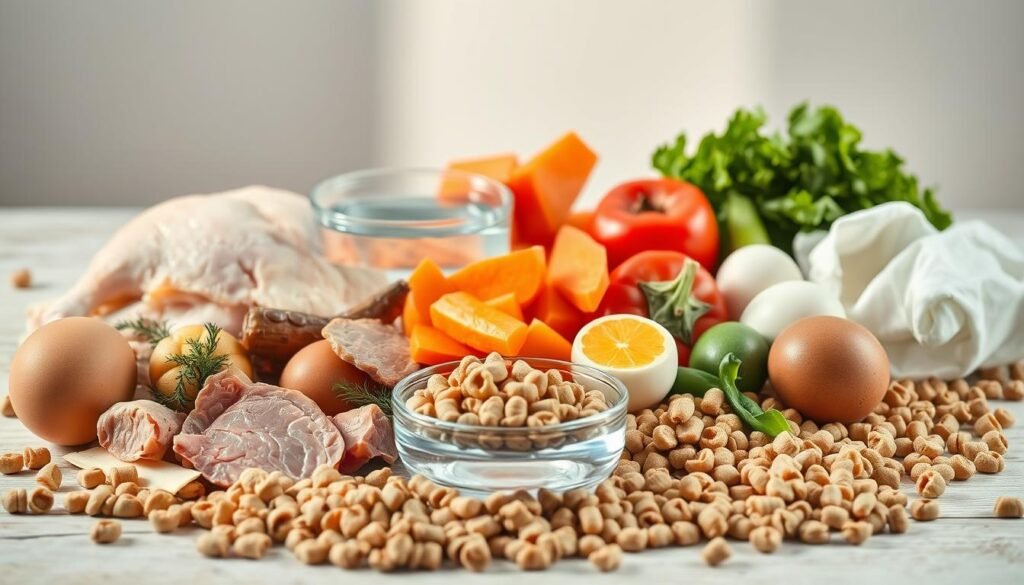
Your cat needs a diet rich in quality nutrients. Start with essential cat nutrients that match their needs. These nutrients support energy, organ function, immune health, and a shiny coat.
Proteins, fats, vitamins, and minerals your cat needs
Cats are obligate carnivores, so they need animal-based protein sources. Proteins give them critical amino acids like taurine and arginine. Without taurine, your cat risks heart and eye issues.
Fats provide energy and essential fatty acids. Include omega-3s from fish oil and omega-6 like linoleic acid. Balance those fats to avoid inflammation.
Vitamins and minerals are key for long-term health. Your cat needs preformed vitamin A, vitamin D, vitamin E, and B-complex vitamins. Calcium and phosphorus must be balanced, with a ratio near 1.2:1. Trace minerals like zinc and copper complete the profile.
Moisture is vital because cats have a low thirst drive. Wet or home-cooked diets can help maintain urinary tract and kidney health.
Human foods that are safe and nutritious for cats
You can use common ingredients safely. Cooked lean poultry—chicken or turkey—is a great protein base. Cooked fish like salmon or tuna adds omega-3s in moderation.
Plain cooked egg provides protein and B vitamins. Small portions of cooked carrot or green beans add fiber and texture. Plain canned pumpkin helps digestion when used sparingly.
Use low-sodium chicken or beef broth for moisture and flavor. Check labels to ensure no onion, garlic, or excessive salt.
Ingredients to avoid for safety and toxicity
Some human foods are dangerous for cats and must be excluded. Onions, garlic, and chives can cause hemolytic anemia even in small amounts.
Chocolate, caffeine, and alcohol are toxic and must never be offered. Grapes and raisins risk acute kidney injury. Avoid products containing xylitol, which can trigger severe reactions.
Raw fish, raw eggs, and raw pork carry pathogens and can cause nutrient imbalances if fed exclusively. Cooked bones can splinter and cause harm, so never offer them. Milk and many dairy products cause digestive upset because most adult cats are lactose intolerant.
Avoid high-sodium, highly spiced, or cured meats with nitrates. These foods can damage kidneys and upset digestion.
Easy Homemade Cat Food: Simple Recipes for Busy Owners
Making homemade cat food is easy and keeps your cat healthy. These recipes are quick to prepare and gentle on your cat’s stomach. Start by mixing a little with their regular food.
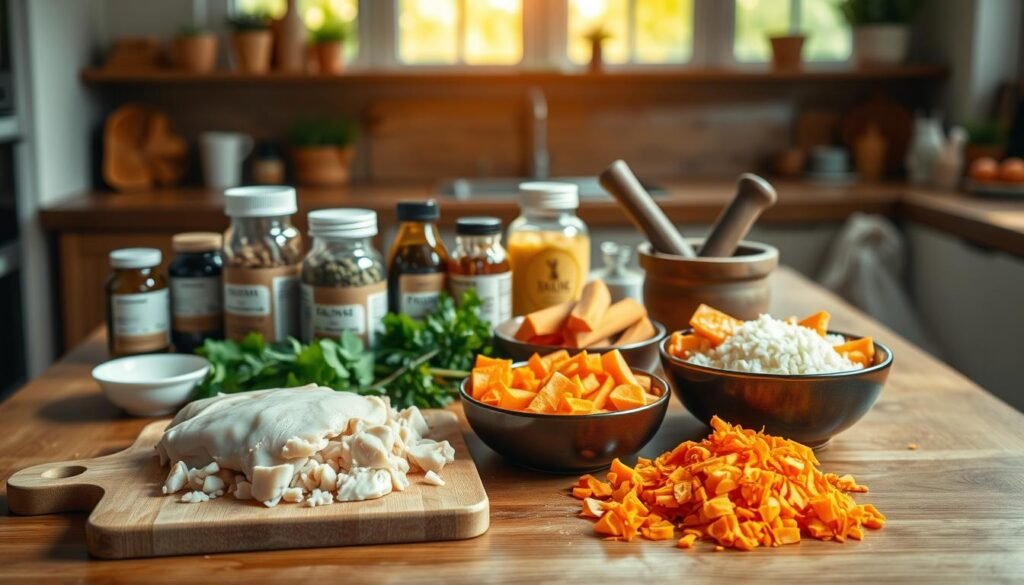
Basic cooked chicken and rice mix
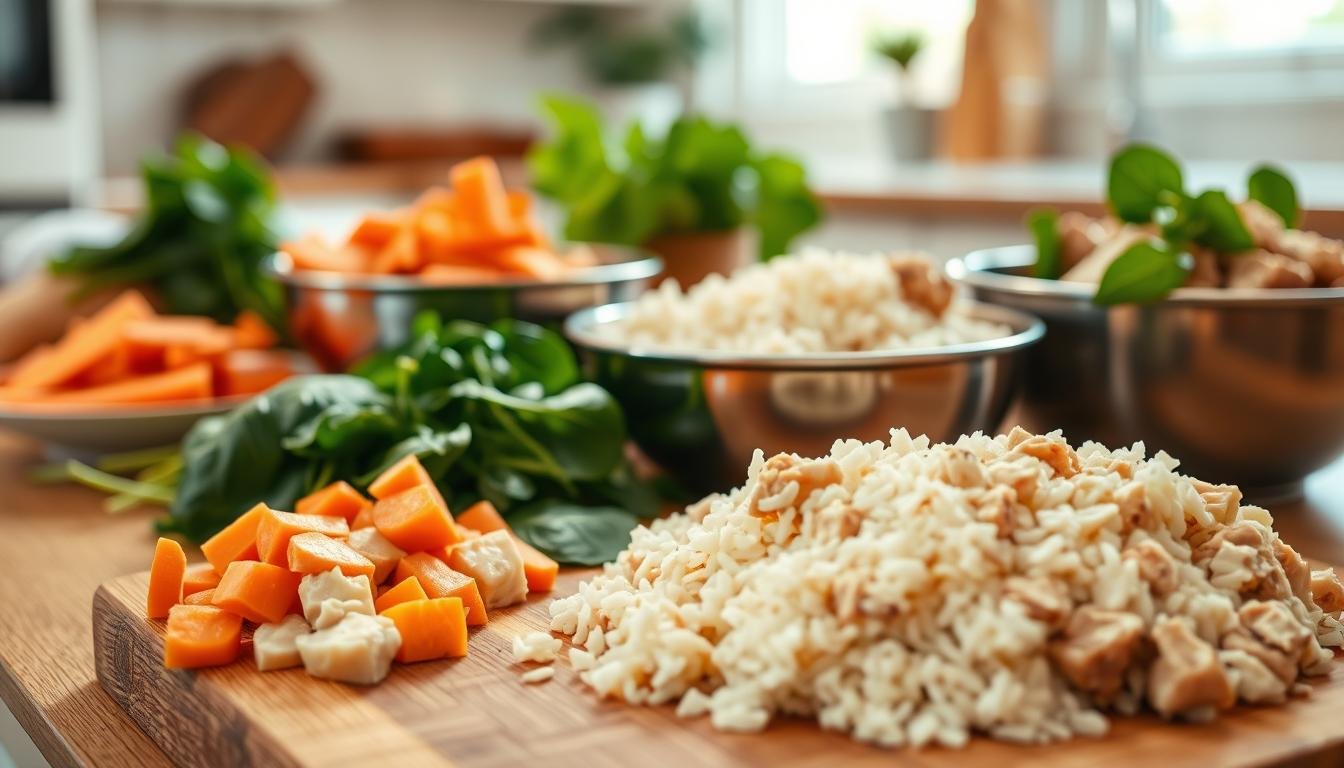
This recipe is great for cats with mild stomach issues. Use boneless, skinless chicken breast cooked to 165°F. Shred it finely.
Cook white rice until it’s fully done. Mix it with more chicken than rice, about 70% chicken to 30% rice. Add taurine and a multivitamin for cats. Serve it warm but not hot. Keep it in the fridge for three days or freeze for up to three months.
Quick tuna and pumpkin blend for digestion
Tuna is tasty and helps with digestion. Mix it with plain pumpkin for fiber. This helps with constipation or diarrhea.
Add a bit of cooked chicken or boiled egg if you want. Use taurine and a cat multivitamin for occasional meals. Tuna alone isn’t balanced and may have mercury, so use it sparingly.
Single-ingredient steamed options for picky eaters
Steamed foods are good for picky or sick cats. Try plain steamed chicken breast, whitefish, or turkey.
Serve the protein shredded and at room temperature. This reduces allergy risks. Use these options short-term or with supplements for balanced nutrition.
Cat Food Recipes for Sensitive Stomachs and Special Diets
You’re looking for recipes that ease digestion and avoid common irritants. Here are some vet-approved ideas for low-fat, hypoallergenic, and digestive cat food. These recipes are perfect for cats with sensitive stomachs.
Low-fat and hypoallergenic recipe ideas
Choose lean proteins like skinless chicken breast or ground turkey for low-fat cat food. Cook them well, remove excess fat, and skip added oils. This keeps meals light and easy for cats with pancreatitis.
For hypoallergenic recipes, pick one new protein and one carb. Try rabbit with sweet potato or venison with plain rice. Always get vet advice to make sure the diet is balanced and safe.
Recipes focused on digestive health and fiber
Add a teaspoon of canned plain pumpkin to meals for a single cat. Pumpkin’s soluble fiber helps with loose stool without adding calories. But, use psyllium husk only under vet guidance and in tiny amounts.
Use probiotic supplements made for pets. Look for ones with Enterococcus faecium or other studied strains. A little cooked squash or pumpkin can also help as prebiotics.
How to transition your cat to a sensitive-stomach recipe
Gradually switch diets over 7–10 days. Start with 25% new food and 75% old for two to three days. Then, move to 50/50 for another two to three days.
Continue with 75% new for two to three days, then switch to full new food. Watch for changes in appetite, energy, vomiting, and stool. If problems get worse, stop the new food and call your vet.
Keep a log of ingredients and amounts. This helps with allergy testing and supports elimination trials. Always check with your vet before trying new recipes, especially for sensitive stomachs or hypoallergenic needs.
Homemade Kitten Food and Nutrient-Dense Options
Kittens grow fast and need special food. Homemade kitten food gives them more calories, protein, and minerals. This helps their bones and brains grow strong. Make sure the food matches your kitten’s age and how active they are.
Differences between kitten and adult cat nutrition
Kittens eat more calories and need more protein and fat than adult cats. They also need more calcium and phosphorus for strong bones. Taurine is very important for their growth. Commercial kitten foods meet these needs, but homemade recipes need careful planning and vet advice.
High-calorie, nutrient-rich recipes for growth
Use high-calorie foods like chicken thigh and ground turkey. Add cooked egg yolks for extra calories and vitamins. Fish oil is good for omega-3s, but use the right amount for kittens.
Don’t forget taurine and a kitten multivitamin/mineral product. For calcium, you can use finely ground, sterilized eggshells or calcium carbonate. Your vet can help you with the right amounts. This makes your homemade food perfect for your kitten’s growth.
How to safely introduce homemade food to kittens
Start introducing homemade food when kittens are weaned, usually between four and eight weeks. Always get vet approval first. Start with a mix of 25% homemade and 75% commercial kitten food. Gradually increase the homemade portion over 7–10 days, watching for signs of health.
Cook all proteins well to avoid infections. Raw diets are too risky for young kittens. Feed them often, three to four times a day, or more if your vet says so.
Regular vet visits are crucial. Check your kitten’s growth and adjust their food or supplements as needed. This ensures they stay healthy and grow well.
| Focus | Key Ingredients | Supplements | Feeding Notes |
|---|---|---|---|
| Energy-dense base | Chicken thigh, ground turkey, cooked egg yolks | Fish oil (omega-3s) | Frequent meals; monitor weight gain |
| Bone growth balance | Lean protein plus measured calcium source | Calcium carbonate or processed eggshells | Maintain proper Ca:P ratio; vet verification required |
| Micronutrient coverage | Organ meats in small amounts, varied proteins | Kitten multivitamin/mineral and taurine | Follow supplement dosing for kittens |
| Transition strategy | Trusted commercial kitten food mixed with homemade | None specifically; use same supplements as feeding plan | Gradual switch over 7–10 days; watch stool and energy |
Homemade Cat Treats and Recipes for Weight Management
Keeping your cat at a healthy weight is key for their mobility and health. You can give them tasty rewards without adding too many calories. Choose simple, lean options and use measured portions. Treats should be for training and fun, not just snacks.
Healthy snack recipes your cat will love
For treats, single-ingredient options are best. Try small pieces of cooked chicken breast, steamed fish flakes, or freeze-dried meat like PureBites. These are easy to portion out.
Bake tiny meatballs from lean ground turkey or chicken. Mix with egg and cut into small bites for training. Tuna flakes can be baked into crackers, but use them sparingly due to mercury risks.
Keep treats under 10% of your cat’s daily calories. This balance is important when giving homemade treats along with regular meals.
Low-calorie homemade cat food for weight loss
For weight loss, focus on protein and reduce fat. Use lean white meats and broth to add moisture and make meals more filling. A little canned pumpkin or steamed green beans can add fiber safely.
Work with your vet to find your cat’s target weight and energy needs. A 10–20% caloric deficit is often effective, but your vet must approve the plan to ensure your cat stays healthy.
Portion control and feeding schedules to manage weight
Use a kitchen scale or precise measuring cup for every meal. Pre-portion daily rations into individual packs to avoid overfeeding. Stop leaving food out and control portions to manage calories.
Feed two to four meals a day instead of leaving food out. Set regular feeding times to help regulate your cat’s appetite. Use puzzle feeders or toys to slow eating and add activity. Weigh your cat every two to four weeks and adjust portions as needed to lose weight safely.
| Goal | Food Examples | Portion Strategy | Vet Tip |
|---|---|---|---|
| Short-term training rewards | Freeze-dried meat treats, cooked chicken pieces | Pea-sized pieces; keep treats | Track treat calories in daily total |
| Daily low-calorie meals | Lean turkey/chicken, broth, small pumpkin | Measured meals, 10–20% calorie reduction | Calculate RER with your veterinarian |
| Slow feeders and enrichment | Puzzle feeders with measured portions | Divide daily ration across puzzles or timed meals | Monitor weight every 2–4 weeks |
| Preventing rapid loss | Balanced, higher-protein options | Gradual reduction aiming for 0.5–2% weekly | Seek immediate vet care for rapid drops |
Conclusion
Homemade cat food recipes let you control what your cat eats. You can make sure they get fresh ingredients and meals tailored to their needs. But, it’s important to include all the nutrients they need.
Healthy cat food recipes should have high-quality protein and fats. You also need to add taurine, calcium, phosphorus, and vitamins. Without these, even the best homemade meals can be lacking.
Before making a big change, talk to your vet. This is especially true for kittens, seniors, or cats with health issues. Start with simple recipes like chicken-and-rice or tuna-and-pumpkin. Follow your vet’s advice on how much to feed and what supplements to add.
Batch-cooking and freezing can help. Measure out portions and watch your cat’s weight and stool. Slowly introduce new foods over 7–10 days. Try single-ingredient steamed foods and homemade treats to see what they like.
But, always use complete, balanced recipes for their main meals. For long-term feeding, use trusted sources. The American Veterinary Medical Association and the American College of Veterinary Nutrition can help. With careful planning and vet advice, homemade cat food can be a great choice.